Everything You Need to Know About Door Latches
Door latches are essential components in our daily lives, providing security, privacy, and safety to homes and commercial spaces alike.
Despite their ubiquitous presence, many people are unaware of the variety of latches available and their specific uses.
This guide aims to clarify latches, offering detailed insights into their types, uses, measurements, and installation methods.
In this article, readers will gain a thorough understanding of different latch types, from deadbolts to tubular mechanisms, and their respective advantages and applications.
This door latch guide will help you understand the intricacies and the need to select the right latch for your needs.
What is a Door Latch?

A latch is a mechanical fastener used to keep a door closed.
It consists of a bolt or bar that is engaged into a strike plate or similar device, preventing it from being opened without manipulating the latch.
The primary function of this mechanism is to provide security and control access.
Latches are commonly made from a variety of materials, including steel, brass, zinc, and stainless steel.
The basic operation involves the manipulation of the bolt, which is retracted and extended to open or close the door.
This mechanism can be operated by various means, such as turning a knob, pressing a lever, or using a key.
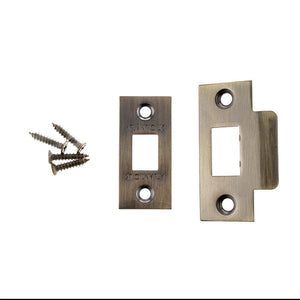
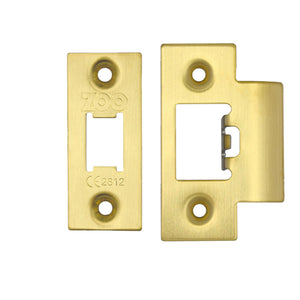
The bolt interacts with the strike plate installed on the frame, securing it in place when closed.
The concept of latches has evolved over centuries. Early versions were simple wooden bars used in ancient civilisations.
Over time, metalworking advancements led to the development of more sophisticated mechanisms, incorporating various features for improved security and convenience.
Today, modern latches come in a wide range of designs and functions, catering to diverse needs and aesthetic preferences.
What are Door Latches Used For?
The primary function of these mechanisms is to secure an entryway, preventing unauthorised entry.
Latches are integral to the security systems of both residential and commercial properties.
By engaging the latch, the entry is held firmly in place, making it difficult for intruders to gain access without the correct key or mechanism to release the latch.
Beyond security, latches also serve to provide privacy.
In settings such as bathrooms and bedrooms, these mechanisms make sure that the spaces remain private, with only those granted access able to enter.
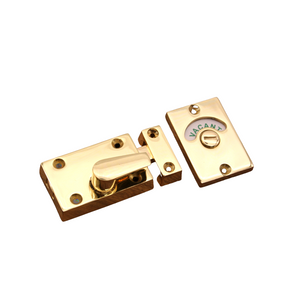
In public and commercial buildings, latches on restroom stalls and changing rooms maintain the privacy of individuals using these facilities.
Latches also contribute to safety within a property.
For instance, childproof versions are used on doors and cabinets to prevent young children from accessing potentially dangerous areas or substances.
In addition, emergency exit doors often feature specific latches that allow for quick and easy egress during emergencies while preventing unauthorised access from the outside.
In residential settings, latches are ubiquitous, found on almost every door within a home.
They are used on entrances for security, and on interiors for privacy, along with cabinets and cupboards for safety.
Different types cater to the varying needs within a home, from strong deadbolts on front doors to simpler mechanisms on bedroom doors.
In commercial settings, latches are equally useful but often more varied due to the different requirements of businesses.
High-traffic areas may use mechanisms designed for durability and ease of use, while areas requiring high security might use advanced systems integrated with electronic access control.
Additionally, aesthetic considerations can play a significant role in commercial properties, with latches chosen to complement the overall design and style of the premises.
Latches also add to the aesthetic appeal of an entryway and, by extension, the entire room.
Available in various finishes and designs, they can be selected to match the architectural style and interior decor of a space.
Whether opting for a vintage brass latch for a traditional look or a sleek stainless steel latch for a modern touch, the right choice can improve the visual appeal of an entry and contribute to the overall design theme of a home or commercial space.
Types of Door Latches
Door latch types vary, each designed for specific applications and offering unique features.
Understanding the different types can help in selecting the most appropriate latch for your needs.
This section will provide an overview of several common types, their characteristics, and typical uses.
Deadbolt Latch
A deadbolt latch is known for its high security.
It features a solid metal bolt that extends into the frame, providing a strong barrier against forced entry.
Deadbolts are commonly used in exterior doors for added security. They come in various types, including single and double-cylinder deadbolts.
Single-cylinder versions are operated with a key from the outside and a thumb turn from the inside, while double-cylinder deadbolts require a key to operate from both sides.
These latches are highly effective in preventing break-ins, making them a preferred choice for the front and back.
Rim Latch
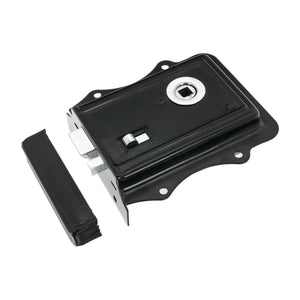
A rim latch is mounted on the surface rather than being recessed into the door. It is typically used in older or traditional homes.
Rim latches offer convenience and are often used in conjunction with other locking mechanisms for added security.
These latches are operated by a knob or lever on the inside and can be locked with a key from the outside.
Rim latches are often found on garden gates, internal doors, and secondary entrances. They provide a vintage look and can be a charming addition to period properties.
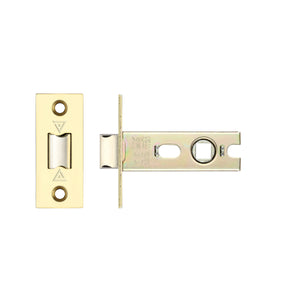
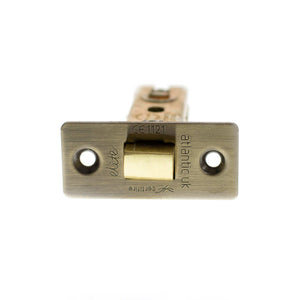
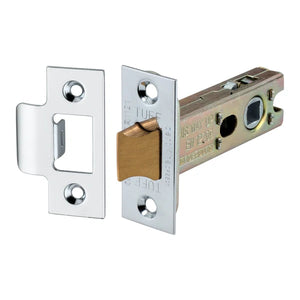
Tubular Latch
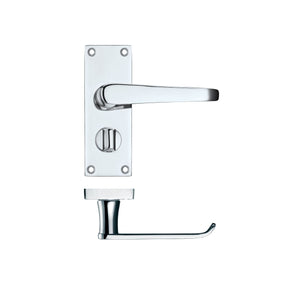
Tubular latches are commonly used in interior doors.
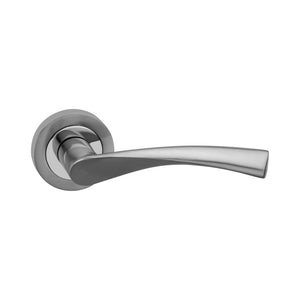
They are easy to install and operate with a simple turn of the knob or lever.
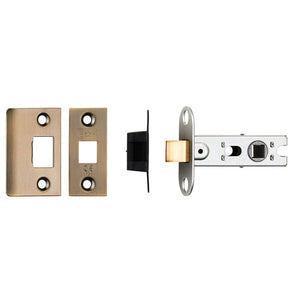
These latches consist of a spring-loaded bolt that retracts when the handle is turned.
They are favoured for their straightforward mechanism and reliability.
Tubular latches are available in various sizes to suit different thicknesses and are often used in conjunction with doorknobs or lever handles.
They are ideal for bedroom, bathroom, and closet doors, providing a secure closure without the need for a lock.
Rollerbolt Latch
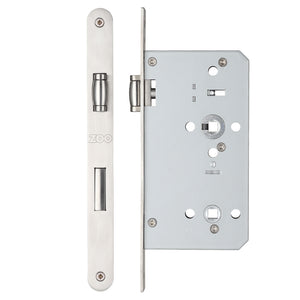
A rollerbolt latch uses a spring-loaded roller to secure the door.
It is often used in applications where it needs to latch automatically, such as in hotel rooms. The rollerbolt latch offers a smooth operation and is suitable for high-traffic areas.
When the door is pushed shut, the roller compresses and then rolls back into place, holding it closed.
This type of latch is particularly useful in situations where hands-free operation is needed, or where it’s frequently opened and closed.
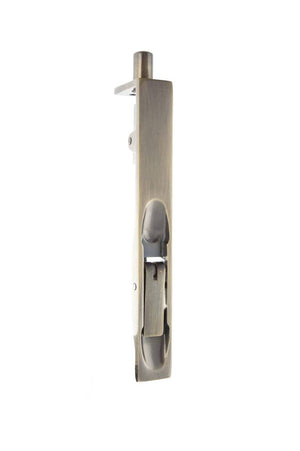
Flat Latch
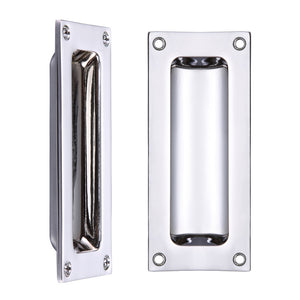
Flat latches, also known as flush latches, are designed to sit flush with the surface. They are often used in cabinets and other furniture.
Flat latches provide a clean and unobtrusive appearance while offering reliable functionality.
These latches can be operated by a small lever or push button and are typically used in applications where aesthetics are required.
Flat latches are ideal for modern interiors where a sleek and minimalistic look is desired.
They are also used in commercial settings, such as office cabinets and display cases, where a flush finish is required.
How are Door Latches Measured?

Accurately measuring latches is necessary so they fit correctly and function properly. ‘
Incorrect measurements can lead to problems with installation and security. Here’s how to measure latches accurately:
Proper measurements allow the mechanism to fit into the frame and align with the strike plate on the frame.
This alignment is essential for the latch to operate smoothly and securely. Incorrect measurements can result in a misaligned latch, causing difficulties in opening and closing the door, and potentially compromising security.
When measuring for a latch, consider the following key dimensions: backset, case width, case height, forend, and spindle hole diameter.
The backset is the distance from the edge to the centre of the latch or lock borehole. Common backset measurements are 44 mm and 57 mm.
This measurement means that the latch is positioned correctly within the door, allowing the bolt to engage properly with the strike plate on the frame.
The case width and height refer to the dimensions of the latch body. The latch body must fit within the mortise cutout in the door.
Accurate measurements of the case width and height are essential so that the latch body can be securely housed within the door.
The forend is the plate that sits on the edge of the door and houses the latch mechanism.
Measuring the height and width of the forend is used so it fits within the recess cut into the edge of the door. This allows for a flush and secure fit.
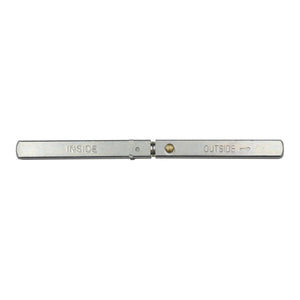
The spindle hole diameter is the diameter of the hole through which the spindle (connecting the handles) passes.
Measuring the spindle hole diameter accurately is advised, this is so the spindle and handles operate smoothly.
To measure the backset, place the tape measure at the edge of the door and extend it to the centre of the hole (borehole) where the latch will be installed.
This measurement is your backset. Accurate measurement of the backset means that the latch is positioned correctly within the door.
Next, measure the width and height of the latch body (case). These dimensions should be taken carefully to make sure that the latch body can fit within the mortise cutout in the door.
Accurate measurements of the case width and height are essential for a secure fit.
For the forend, measure the height and width of the forend plate. This should match the recess cut into the edge of the door.
Checking that the forend dimensions match the recess will provide a flush and secure fit.
Finally, measure the diameter of the hole for the spindle that connects the handles through the latch mechanism. Accurate measurement of the spindle hole diameter means that the spindle and handles can operate smoothly.
To measure latches accurately, you will need a tape measure, a calliper, a ruler, a pencil, and paper.
The tape measure is used for measuring distances and dimensions, while the calliper provides precise measurements of smaller components like spindle holes.
A ruler is useful for straightforward measurements of width and height, and a pencil and paper are essential for noting down measurements and creating a reference.
How to Fit a Door Latch
Fitting a latch requires careful preparation and precise execution so that the mechanism operates smoothly and provides the desired level of security. Here is a detailed guide on how to fit a latch.
Before beginning the installation process, gather the necessary tools.
You will need a tape measure, chisel, hammer, drill, drill bits, screwdriver, pencil, and a utility knife. Having these tools on hand will facilitate a smooth and efficient installation process.
First, measure and mark the position of the latch on the edge of the door. Use a tape measure to find the correct height and mark it with a pencil.
This measurement should match the height of the strike plate on the frame to allow for proper alignment. Next, mark the centre of the door edge where the latch will be installed. This mark will guide your drilling.
Step-by-Step Guide on How to Install a Door Latch
- Begin by drilling a hole at the marked position on the edge to accommodate the latch body.
- Use a drill bit that matches the size of the latch body for a snug fit. After drilling the hole, insert the latch body into the hole to check the fit.
- If the latch body fits securely, proceed to the next step. If necessary, use a chisel to adjust the size of the hole for a proper fit.
- Next, use a chisel and hammer to create a recess for the latch forend.
- This recess should be deep enough to allow the forend to sit flush with the edge.
- Carefully chisel out the wood, frequently checking the fit until the forend is flush with the edge.
- Once the recess is prepared, insert the latch body into the hole and secure the forend to the edge with screws.
- Use a screwdriver to tighten the screws, and make sure the latch body is firmly fixed in place.
- Next, mark the position of the spindle hole on both sides of the door. Use a drill to create the spindle hole, meaning it is aligned with the latch mechanism.
- Insert the spindle through the hole, connecting the handles on either side.
- After installing the spindle and handles, test the operation by turning the handles and engaging the latch bolt.
- Make sure the mechanism operates smoothly and engages with the strike plate on the frame.
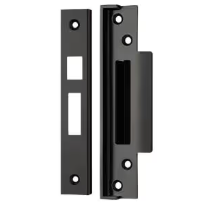
- Finally, install the strike plate on the frame, mark the position of the latch bolt on the frame and chisel out a recess for the strike plate. Secure the strike plate with screws, this will help it align with the latch bolt for a secure fit.
To make sure the locks and latches are fitted correctly, take your time to measure and mark accurately.
Double-check all measurements before drilling or chiselling. When installing the latch body and forend, make sure they sit flush with the edge for a neat and secure fit.
Test the operation frequently during installation so it operates smoothly and aligns with the strike plate.
Fitting locks and latches requires careful preparation, accurate measurements, and precise execution.
By following these steps and using the correct tools, you can successfully install a latch that provides the desired level of security, privacy, and convenience.