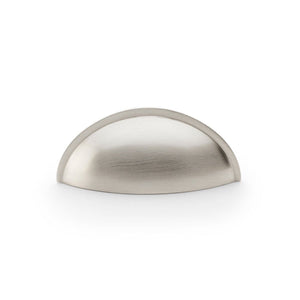
Brushed Nickel vs Satin Nickel Door Handles: What's the Difference?
Short answer: in the UK the two names are used almost interchangeably, and a great deal of hardware sold as “brushed nickel” and “satin nickel” is the same finish under two labels. Where a genuine difference exists, it is texture: brushed nickel carries fine directional grain lines from the brushing process, while satin nickel is smoother and more uniform, with a soft matte glow rather than a visible grain.
If you are matching to hardware you already own, the finish name on the box is far less reliable than putting the two side by side. Manufacturers do not apply these terms consistently.
| Brushed nickel | Satin nickel | |
|---|---|---|
| Texture | Fine directional grain | Smooth and uniform |
| Sheen | Low, muted | Soft, slightly brighter |
| Colour | Warm silver-grey | Warm silver-grey |
| Hides fingerprints | Very well | Well |
| Best suited to | Modern, industrial, rustic | Traditional and contemporary |
Ready to buy?
Browse brushed nickel door handles or the wider satin nickel range — levers, knobs and matching accessories, with next-day UK delivery on in-stock orders.
Finish appearance

Both finishes share the same warm, silvery tone — softer and slightly darker than chrome, without the yellow of brass. What separates them, when they are genuinely different products, is surface texture.
Brushed nickel is finished with fine abrasive lines that run in one direction. Up close you can see the grain; from across a room it reads as a muted, slightly handmade surface that scatters light rather than bouncing it back.
Satin nickel is smoother. There is no visible grain, and the surface reflects light evenly for a soft, consistent glow. It looks a touch cleaner and more refined; brushed nickel looks a touch more tactile.
Shine level

Brushed nickel has the lower sheen of the two. The texture diffuses light, which makes it excellent at hiding fingerprints and smudges — a real advantage on a kitchen or hallway door that gets used fifty times a day.
Satin nickel sits a step brighter: not polished, but with a velvety sheen that catches light more evenly. It shows marks a little more readily, though nothing like polished chrome does.
Durability and upkeep
Both are hard-wearing and corrosion resistant, and both are suitable for bathrooms and busy family doors. Nickel does not tarnish the way unlacquered brass does.
The practical difference is maintenance. Brushed nickel's grain disguises minor scratches and daily marks. Satin nickel's smoother surface shows water spots and fingerprints sooner, so it wants wiping down a little more often. Either way the routine is the same: a damp cloth and mild soap, dried off. Avoid abrasive creams and anything containing bleach or ammonia, which will damage the finish.
One tip worth knowing: on brushed nickel, always wipe along the direction of the grain, not across it.
How they look under different lighting
Lighting changes these finishes more than most people expect, which is why samples matter.
In a bright, south-facing room, brushed nickel holds up well — the texture cuts glare and stops the handles becoming hot spots of reflection. It can read slightly darker in strong daylight.
In a darker room or a north-facing hallway, satin nickel is the better performer. Its even reflectance lifts the hardware out of the gloom without looking harsh, where brushed nickel can go flat and grey.
Cost
Prices overlap almost completely. Brushed nickel is occasionally a little dearer because the brushing adds a production step, but the gap is small and is usually swamped by brand, design and whether the handle is solid brass or zinc alloy underneath.
Judge on the handle, not the finish name. A well-made satin nickel lever will outlast a cheap brushed nickel one every time.
How nickel compares to chrome and polished nickel
The other finishes people cross-shop against:
- Satin or brushed chrome — cooler and bluer than nickel, with a slightly harder, more clinical look. If your taps are chrome, chrome handles will match better than nickel will.
- Polished nickel — the same warm tone, but mirror bright. Handsome in period properties, and considerably more work to keep clean.
- Polished chrome — the brightest and coldest of the group, and the least forgiving of fingerprints.
Nickel's warmth is what makes it so easy to live with: it sits comfortably alongside oak, warm greys, off-whites and brass accents in a way that chrome does not.
Which should you choose?
- Choose brushed nickel if you want the most forgiving finish on high-traffic doors, or you are working with darker woods, matt black fittings and a modern or industrial scheme.
- Choose satin nickel if you want a cleaner, more refined look, you are working with white or pale cabinetry, or the room does not get much natural light.
- Either is a safe choice if you are matching to existing nickel hardware — but order one handle first and hold it against what you have before committing to a whole house.
Frequently asked questions
Is satin nickel the same as brushed nickel?
In most UK catalogues, yes — the terms are used interchangeably for the same warm silver-grey finish. Where a manufacturer distinguishes between them, brushed nickel has a visible directional grain and satin nickel is smoother and more uniform. If an exact match matters, compare physical samples rather than trusting the finish name.
Can you get brushed nickel door handles?
Yes. Brushed nickel is a mainstream finish, available in lever handles, mortice knobs, bathroom sets and matching accessories. You can see our own range of brushed nickel door handles here.
Is brushed nickel hardware dated?
No. Warm metallics have held their place through several cycles of fashion, and nickel in particular has stayed popular because it is neutral — it does not date the way a strongly coloured finish can. Matt black and brass have had more attention in recent years, but nickel remains one of the most specified finishes in UK homes precisely because it is quiet and easy to live with.
What colour is brushed nickel?
A warm silver-grey. Alongside chrome it reads slightly darker and noticeably warmer; alongside brass it reads cooler and more neutral.
Does brushed nickel show fingerprints?
Less than almost any other metallic finish. The fine grain breaks up the surface so marks do not stand out, which is why it is such a practical choice for kitchens, bathrooms and front doors.
Can you mix brushed nickel and satin nickel in the same room?
Usually yes, and often nobody notices. The tone is the same; only the texture differs. Mixing is most visible when two pieces sit directly next to each other — a handle and an escutcheon on the same door, for instance — so keep those matched and be relaxed about the rest.
Does brushed nickel go with chrome?
It can, but it needs deliberate handling. Nickel is warm and chrome is cool, so side by side the difference reads as a mismatch rather than a choice. If you are combining them, separate them by function — chrome in the bathroom, nickel on the doors — rather than mixing them on the same fitting.
Where can I find brushed nickel indoor door handles?
We stock brushed and satin nickel levers, knobs and accessories for internal doors, with next-day UK delivery on in-stock orders. Start with brushed nickel door handles, or browse all internal door handles to compare finishes side by side.
For more on choosing a finish, read our guide to chrome vs nickel.
Shop nickel door handles
Everything compared in this guide, ready to order — next-day UK delivery on orders before 2pm.