The Best Door Handles & Locks for Rental Properties
Ask most landlords what they spent on door furniture at their last refurb, and you'll get one of two answers. Either they don't remember, because it was a line on a builder's invoice they barely glanced at. Or they do remember, because they've already replaced it twice.
Rental properties are, in effect, light commercial operations. A two-bedroom flat tenanted continuously for ten years will have its door handles operated more times than many office corridors, yet the hardware is almost always specified at the domestic end of the market. The result is predictable: drooping levers, seized latches, peeling finishes, and an entirely avoidable maintenance callout that costs more than the handle ever did.
This guide covers the best door handles and locks for rental properties across every major tenancy model, including buy-to-let residential, HMOs, short-term Airbnb lets, and holiday cottages. It addresses both the practical and the compliance dimensions, because for landlords, getting the hardware wrong isn't just an inconvenience: in some property types, it's a legal liability. Whether you manage one flat or a portfolio of fifty, the right door furniture is a small investment that pays for itself many times over in reduced callouts, faster re-lets, and tenants who feel they're living somewhere that's been properly thought through.
The best door handles and locks for rental properties are durable lever sets in solid brass or stainless steel, paired with certified sashlocks or tubular latches - chosen for cycle rating, finish longevity, and, where legally required, fire door compliance.
Section 1: Why Standard Domestic Hardware Fails in Rental Properties
Walk into any DIY superstore and the door handle aisle will offer dozens of options at price points from £4 to £40. What it won't tell you is that most of those handles are rated, tested, and manufactured for a single owner-occupier household. Rental properties don't work like that. For a deeper look at how use intensity affects hardware performance, our guide on the best heavy duty door handles for high traffic areas covers the underlying engineering in detail.
The problem shows up in predictable ways. Levers made from hollow zinc alloy start to droop within months under constant use, because the internal return spring isn't strong enough for the load. Lacquered finishes that look crisp in the packaging start to flake around the fixing points and grip area within a year. Latches begin to stick or fail to retract cleanly, leading to tenant reports of doors that won't open, which means an emergency callout, regardless of the time of day.
The financial case for upgrading is straightforward. A budget lever handle at £8 replaced three times over five years, with a £60–80 tradesperson callout each time, costs over £250. A properly specified lever handle at £28–35, installed once and maintained correctly, costs a fraction of that over the same period and doesn't generate a single frustrated tenant message.
There's also a liability dimension that many landlords underestimate. A lock that fails on a fire door, a self-closer that's been removed because a tenant found it inconvenient, or a handle fitted with the wrong backset that prevents a fire door from latching correctly, these aren't just maintenance issues. In an HMO or multi-occupancy building, they're potential regulatory breaches that can result in improvement notices, civil penalties, and in the most serious cases, prosecution.
Section 2: What to Look for When Specifying Rental Property Door Handles
Before looking at individual property types, it's worth establishing the criteria that should inform every handle purchase decision for a rental property. These apply across the board. The weightings shift depending on the tenancy model, but none of them disappear entirely.
The Rental Property Handle Spec Checklist
1. Cycle rating of at least 100,000 - the minimum for any shared or frequently used door in a rental property. A 6-bed HMO front door is used at least 60–80 times per day; a 100,000-cycle handle will last approximately three to four years under that load.
2. Solid material - solid brass, Grade 304 stainless steel, or solid zinc alloy (Zamak). Hollow zinc pot metal is not acceptable for rental use; it looks identical in product photography but fails within months under sustained use.
3. PVD finish or powder coating - not lacquered. PVD bonds to the metal surface at a molecular level and is far more resistant to the cleaning products, UV, and repeated contact that rental properties demand.
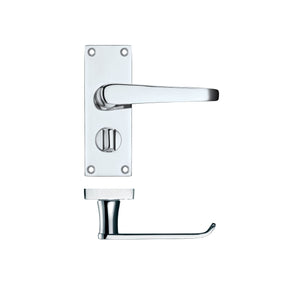
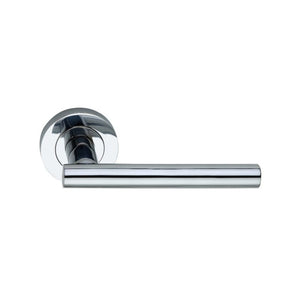
4. Lever on backplate - in almost all rental applications, handles on a backplate are the better choice. The backplate protects the door surface from wear around the fixing area, conceals the screw fixings (reducing tampering), and makes retightening a loose handle significantly easier.
5. Correct latch compatibility - always measure the backset (distance from door edge to centre of latch) before ordering. Standard UK backsets are 44mm and 57mm, but older properties and composite doors can vary. Mismatched backsets are one of the most common causes of failed handle installations.
6. Fire door suitability where required - any handle fitted to a fire door must be part of a compliant ironmongery schedule. If in doubt, always source from a fire door-rated range rather than assuming standard commercial handles will pass inspection.
7. Consistent specification across the portfolio - if you manage multiple properties, standardising on two or three handle styles means you can hold spare stock and resolve hardware failures same-day without a separate order each time.
|
Material |
Durability in Rental Use |
Finish Options |
Recommended For |
Avoid If... |
|
Solid Brass |
★★★★★ |
PVD, lacquered, antique |
Holiday lets, period BTL, HMOs |
Budget is very tight |
|
Grade 304 Stainless |
★★★★★ |
Satin, brushed, polished |
HMOs, BTL flats, commercial lets |
Coastal — use 316 instead |
|
Grade 316 Stainless |
★★★★★ |
Satin, brushed |
Coastal properties, external doors |
— |
|
Solid Zinc Alloy (Zamak) |
★★★★☆ |
PVD, satin chrome |
Mid-range BTL, internal doors |
Using lacquered finish |
|
Hollow Zinc / Pot Metal |
★☆☆☆☆ |
Lacquered chrome, brass plate |
Not recommended for any rental use |
— |
Section 3: Fire Door Compliance & What Landlords Must Know
This section covers general guidance only. Fire safety legislation is complex and property-specific. Always consult a qualified fire risk assessor for your specific property type.
Fire door compliance is the area where hardware specification moves from being a quality decision to a legal one. Getting it wrong doesn't just mean a failed inspection, it means a door that may not perform in a fire. Here's what landlords need to understand.
Which Rental Properties Require Fire Doors?
• All licensed HMOs - mandatory under HMO licensing conditions in England, Scotland, and Wales
• Flats in converted buildings - where the conversion created self-contained units, fire separation between floors and between units is typically required
• Properties above commercial premises - the separation between domestic and commercial use must be maintained by fire-rated construction and hardware
• Some purpose-built blocks - depending on building height, construction type, and local authority requirements
• Any property where a fire risk assessment identifies a need - which is a legal requirement for any HMO and any property with communal areas
What Fire Door Hardware Must Include
A fire door is only as effective as its complete ironmongery schedule. Each component must be compatible with the certified door set, mixing certified and non-certified components can invalidate the door's fire rating. Love Handles UK's fire door kits provide pre-matched, certified sets that remove the compatibility risk entirely. A complete fire door ironmongery schedule includes:
• CE-marked lever latch - rated for fire door use, with the correct backset for the door and lock body
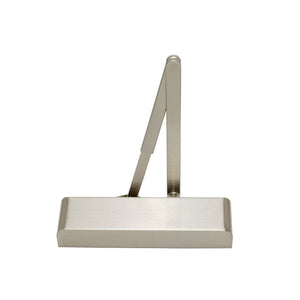
• Self-closing device - a compliant overhead door closer is mandatory on fire doors; removing or disabling it (however understandable the tenant's complaint) is a regulatory breach
• Intumescent strip compatibility - the latch and handle must allow the door to close fully against the intumescent strip without resistance
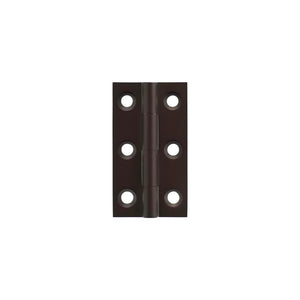
• Fire-rated hinges - typically three per door, rated to the same standard as the door set
• Smoke seals - cold smoke seals around the door frame are required on most fire door specifications
Common Landlord Mistakes on Fire Door Hardware
• Fitting a standard commercial handle on a fire door without checking its certification - the handle may look identical to a certified version but lack the required testing documentation
• Buying a fire door kit and then substituting one component (e.g. using a cheaper latch) - this can invalidate the entire door set's fire rating
• Removing self-closers after tenant complaints - this is one of the most commonly cited breaches in HMO inspections and is not a discretionary decision
• Using the wrong latch backset - a latch that doesn't engage fully because the backset is mismatched will leave a gap that compromises fire and smoke separation
• Not retaining documentation - inspectors will ask for product certification; keep the packaging or download the technical data sheets and store them with the property file
The simplest and most reliable approach to fire door compliance is to source a complete fire door kit from a specialist supplier. A pre-matched kit eliminates component compatibility risk and provides a single point of reference for certification documentation.
Section 4: Short-Term Lets & Holiday Cottages - The Airbnb Specification
The short-term let market operates by different rules from standard residential lettings, and the hardware specification reflects that. Guests are paying a premium, they're forming their first impression within seconds of arrival, and they'll mention the details (good and bad) in their review.
The Guest Experience Dimension
The front door is the very first physical touchpoint a guest has with the property. A handle that feels solid, moves smoothly, and looks premium sets the tone for everything that follows. Conversely, a stiff or wobbly lever on a tatty backplate is a detail that a guest who's paid £200 a night will notice and mention. Review platforms have trained guests to articulate exactly what they experienced and 'the door handle felt really cheap' is a real phrase that appears in real reviews.
Beyond feel, there's the photography dimension. Most guests browse listing images before booking, and hosts who invest in professional photography quickly discover that door hardware is visible in interior shots. A beautifully styled living room photographed past a matt black lever handle on a clean backplate reinforces the quality narrative. The same shot past a cheap chrome handle undermines it.
Smart Locks & Access Control
Keyless entry has become the standard expectation for short-term lets, and for good reason. It eliminates key handover logistics, allows instant code changes between guests, enables remote access management, and removes the risk of a lost key forcing a locksmith callout mid-tenancy. Love Handles UK's access control range covers a variety of keypad and smart lock-compatible hardware to suit different door and lock configurations.
Before specifying a smart lock, check three things: the door thickness (most smart locks have a maximum door thickness they'll accommodate), the backset measurement (must match the existing or replacement lock body), and whether the existing lock body is compatible. You'll also need to check escutcheon compatibility, the escutcheon plate around the keyhole or cylinder must align correctly with the smart lock body.
Styling by Property Type
Short-term let guests have a strong aesthetic expectation, and the right handle finish reinforces the property's identity. Here's how to match the hardware to the brief:
|
Property Type |
Recommended Finish |
Handle Style |
Key Consideration |
|
Coastal cottage |
Brushed nickel or satin stainless (Grade 316) |
Lever on backplate |
Salt-air resistance — always Grade 316 externally |
|
City apartment |
Matt black (PVD) or gunmetal |
Slim lever on backplate |
PVD essential — lacquered matt black fades fast |
|
Rural retreat / barn |
Antique brass or aged bronze |
Lever on rose or backplate |
Warm, characterful; pairs naturally with oak doors |
|
Boutique luxury let |
Brushed brass or satin nickel |
Lever on rose |
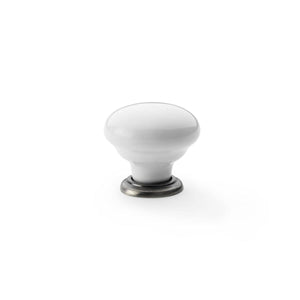
Invest in ceramic knobs for bathrooms |
|
Modern new-build let |
Satin stainless or brushed nickel |
Lever on backplate |
Clean, neutral — photographs well at re-let too |
For guest-facing bathroom doors in short-term lets, handles on a rose paired with matching bathroom turns create a cohesive, hotel-style finish that guests respond to positively. The detail matters more in a holiday let than in a long-term rental, because guests are actively experiencing the space rather than simply living in it.
Section 5: Buy-to-Let & Long-Term Residential - The Durability Specification
For standard AST (Assured Shorthold Tenancy) buy-to-let properties, the brief is different from a holiday let. Aesthetics matter, a well-presented property lets faster and commands a better rent, but the primary driver is durability and low maintenance cost. The hardware needs to look good on the day of viewing and then get out of the way for the next five years.
The Workhorse Finishes for BTL
Satin stainless steel and brushed nickel are the two finishes that consistently perform best in buy-to-let settings. Both hide fingerprints and light surface marks well, both age gracefully without requiring polishing, and both photograph in a neutral, timeless way that doesn't date listing images. Specify lever handles on a backplate in either finish across all internal doors. The consistency makes the property feel considered and well-maintained at viewing, and simplifies replacement if a single handle needs changing.
Matching Front Door Hardware
In BTL properties, it's worth extending the hardware consideration to the front door. A tenant's first impression of the property is formed at the front door, and mismatched or degraded external hardware undermines the quality of whatever's inside. Cylinder pulls, letterplates, and door knockers in the same finish family as the internal handles create a coherent story from the kerb inward.
Bathroom Hardware in Rentals
Bathroom hardware fails faster in rental properties than almost any other category of ironmongery, for two reasons: humidity accelerates corrosion on any finish that isn't genuinely moisture-resistant, and bathroom doors are among the most frequently used doors in any property. Specify bathroom handles on a backplate designed explicitly for wet room environments. These are made with appropriate finishes and mechanism protection. Pair them with bathroom turns that match the handle finish; mismatched bathroom furniture is one of the most visible signs of piecemeal landlord maintenance.
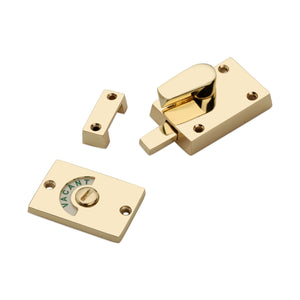
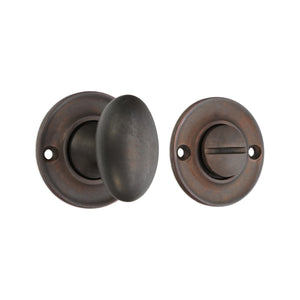
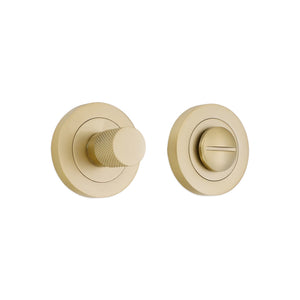
For privacy, a bathroom turn (the thumb-turn privacy lock) is the standard solution for single-occupancy bathrooms and en-suites. In HMOs and shared houses where individual bathroom privacy needs to be lockable from the outside (for maintenance access), a DIN lock or bathroom DIN configuration is the appropriate specification.
The Portfolio Standardisation Advantage
If you manage five or more properties, the single most impactful specification decision you can make is to standardise. Choose one lever handle in one finish for all internal doors across the portfolio. Choose one bathroom turn and one tubular latch. Hold a small stock of each. When a handle fails (and in ten years, some will) the replacement is a fifteen-minute job rather than a trip to the merchant and a two-week wait. The cost saving over a ten-property portfolio over a decade is substantial.
Section 6: Locks for Rental Properties A Landlord's Guide
Handles and locks are often specified separately, but they're part of the same security and compliance picture. Here's how to approach the locks decision across the main door types in a rental property.
6a. Front Door Locks
The minimum standard for any rental property front door is a BS3621-certified 5-lever mortice deadlock. This is the standard required by most residential building insurers, and it's a condition of many landlord insurance policies, a claim made following a break-in through a non-compliant lock may not be paid. Love Handles UK stocks both deadlocks and sashlocks, for front doors where you also want a latch (so the door doesn't need to be deadlocked every time it's closed), a sashlock provides both functions in a single body.
For cylinder security, consider specifying anti-snap, anti-pick euro cylinders. Standard cylinders are vulnerable to a technique called 'lock snapping' that can defeat a standard euro cylinder in seconds. Double cylinders (keyed on both sides) are appropriate where there's a glazed panel adjacent to the door that could otherwise allow the handle to be reached from outside.
6b. Internal Door Locks
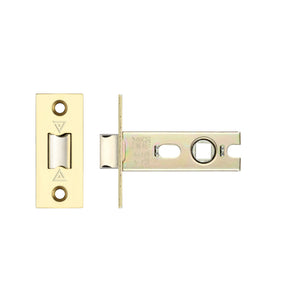
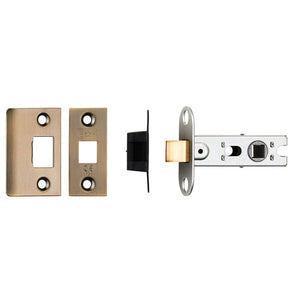
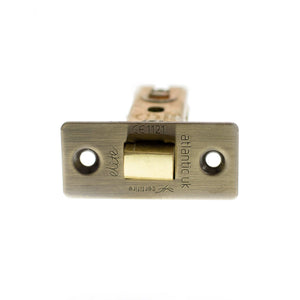
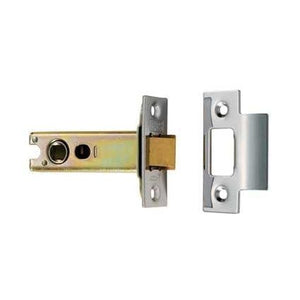
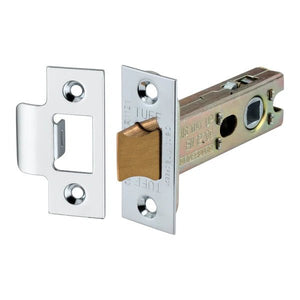
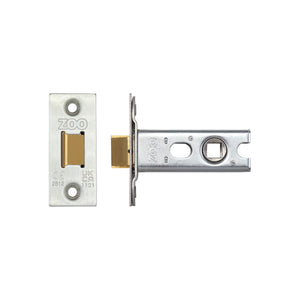
Most internal doors in a rental property don't need a lock, they need a latch. A good-quality tubular latch in the correct backset size is the appropriate specification for the majority of internal doors: bedrooms, living rooms, kitchens in single-occupancy properties. The latch should be CE-marked and, for fire doors, specifically rated for fire door use.
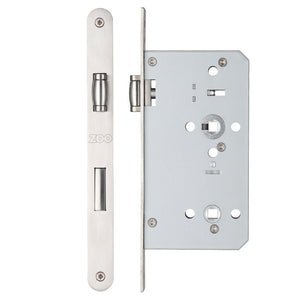
For bathroom and en-suite doors, the standard solution is a cylinder & turn or a bathroom turn thumb-turn privacy lock, these allow the occupant to lock from inside without a key, and can be opened from outside with a coin or screwdriver in an emergency. For properties where DIN-standard locks are specified (common in continental European-style door furniture), bathroom DIN locks provide the same privacy function in a DIN-compatible format.
6c. HMO Room Locks
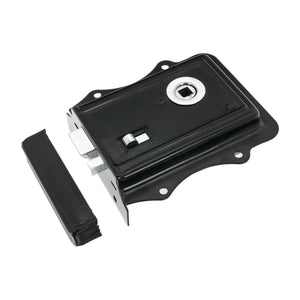
In licensed HMOs, individual bedroom doors are typically required to be lockable, both for tenant security and to prevent unauthorised access to another tenant's room. A sashlock on each bedroom door (providing both latch and deadlock in one body) is the standard specification. The key question then becomes key management.
In an HMO with five or six rooms, managing individual keys for every room and every tenant change quickly becomes logistically complex. Two solutions are worth considering. The first is a keyed-alike cylinder system, where all room doors use the same key, combined with a master key that also opens communal areas. This simplifies key management significantly and reduces the cost of re-keying at tenancy change. The second is a smart access system, particularly suited to HMOs with high tenant turnover.
For outbuildings, meter cupboards, and communal storage areas, padlocks in a weather-resistant finish are the practical solution, specify solid brass or stainless steel bodies rather than the brass-plated zinc padlocks found at builders' merchants, which corrode rapidly on external use.
6d. Smart Locks & Access Control
Smart locks and keypad entry systems have moved from a luxury to a near-standard expectation in short-term lets, and they're increasingly being adopted in HMOs where landlords want to manage access remotely and eliminate the key management burden. Love Handles UK's access control range includes options compatible with a range of door configurations.
Before specifying a smart lock, confirm the following: door thickness (most smart locks have a stated maximum), existing lock body type and backset, escutcheon compatibility, and whether you need a standalone keypad or one that integrates with a property management platform. For integration with guest communication tools, ensure the lock system supports the API connections your platform uses. Also confirm single cylinder compatibility if you're retrofitting around an existing mortice lock body.
Section 7: Maintenance & Replacement - The Landlord's Schedule
Even the best specified hardware needs a maintenance schedule. For a detailed guide to cleaning methods by finish type, see Keep Your Handles Looking New: Care Tips for Every Style and Finish. The landlord-specific schedule below covers inspection timing and what to check.
Recommended Inspection Points
|
Inspection Point |
What to Check |
Frequency |
|
Lever handles |
Spring tension, lever return, spindle wear, fixing tightness, finish condition |
Every tenancy change |
|
Tubular latches |
Latch retraction, spring strength, alignment with keep |
Every tenancy change |
|
Bathroom turns |
Turn operation, indicator function if fitted, fixing security |
Every tenancy change |
|
Front door lock |
Deadlock throw, key operation, cylinder condition, any signs of attempted forced entry |
Every tenancy change + annually |
|
Fire door closers |
Closer speed, full latch engagement, no propping damage |
Every tenancy change + quarterly |
|
Cylinders |
Every tenancy change |
|
|
External hardware |
Corrosion, finish degradation, fixing security |
Annually / after harsh weather |
Changing Locks at Tenancy Changeover
This is one of the most commonly neglected landlord maintenance tasks, and one of the most important. You cannot know for certain that a departing tenant has returned every key they were given, or that they haven't had copies cut. Changing the front door cylinder at the start of every new tenancy is best practice, and many landlord insurance policies require it. Cylinder replacement is a simple task that any competent tradesperson can completed quickly. See our guide on
How to Replace Internal Door Handles in 10 Minutes for the general process; cylinder replacement follows the same principle.
Tenant Damage vs. Fair Wear and Tear
Handle and lock failures exist on a spectrum. A lever that's dropped below horizontal after five years of normal use is fair wear and tear, the landlord's responsibility to replace, not rechargeable to the tenant. A handle that's been forced, a lock that's been drilled, or a backplate that's been damaged by impact is tenant damage, document it with photographs at checkout, reference it against the check-in inventory, and deal with it accordingly through the deposit process.
The Portfolio Landlord's Maintenance Kit
• 3–5 spare lever handle sets in the standardised finish (covers most emergency replacements same-day)
• A box of matching tubular latches in both standard backset sizes (44mm and 57mm)
• 3–4 spare front door cylinders, keyed differently from each other
• Spare bathroom turns in the standardised finish
• Graphite lubricant and PTFE spray for latch mechanism maintenance
• A copy of all product technical data sheets for fire door components
Section 8: Styling Rental Properties with Door Hardware
Premium ironmongery has a halo effect on how a property is perceived at viewing. A prospective tenant standing in a well-presented bedroom will unconsciously register the quality of the handle on the door, it contributes to the overall feeling of a property that has been cared for. For the full picture of what's trending in 2026, see our 2026 Interior Hardware Trends guide. The key points for landlords are as follows.
The Finishes Letting Agents Are Specifying Right Now
Matt black and brushed brass are the two finishes that letting agents and property stylists are most consistently recommending for rental re-lets in 2025 and 2026. Matt black in particular has strong cross-demographic appeal, it works in contemporary flats, new-build houses, and even period conversions with the right door profile. For guidance on keeping it looking sharp, see our dedicated guide on How to Clean and Maintain Matt Black Door Handles. Brushed brass has moved from a boutique hotel aesthetic into the mainstream, particularly in the short-term let sector; for a full breakdown of finish options and longevity, Gold Door Handles Explained: Styles, Finishes, and Maintenance covers everything you need to know before specifying.
The Consistency Principle
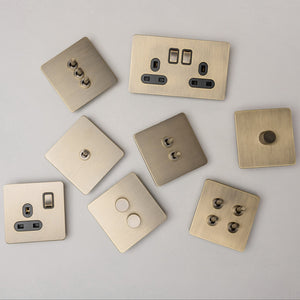
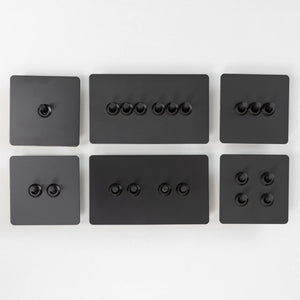
The most impactful styling decision a landlord can make isn't choosing a premium finish, it's applying a consistent finish throughout the property. Handles, door hinges, switch plates, and bathroom accessories in the same metal tone create a coherent interior that reads as designed rather than assembled. This is achievable at a modest budget if you plan the specification before ordering rather than adding pieces incrementally.
The Re-Let Refresh
Void periods are the natural moment to refresh door hardware. Replacing handles across a flat typically costs £100–200 in materials and a half-day's labour, a modest investment against the value of a faster re-let or an uplift in achievable rent. Properties that are refreshed between tenancies consistently outperform those that aren't on both metrics.
Take Away Points
The best door handles and locks for rental properties are not the most expensive options on the market, they're the ones correctly matched to the property type, the tenancy model, and the compliance requirements. A landlord who specifies correctly once, using solid materials, durable finishes, and compliant fire door hardware where required, will spend less over the lifetime of their portfolio than one who replaces budget hardware on a reactive basis. The maintenance arithmetic is straightforward; the compliance and liability arithmetic even more so.
For HMO landlords, fire door compliance is non-negotiable and pre-matched kits are the safest route. For short-term let hosts, smart access and premium aesthetics are the value-drivers. For buy-to-let landlords managing multiple properties, standardisation and stock holding are the operational advantages that make hardware a solved problem rather than a recurring headache.
Frequently Asked Questions
What locks are legally required in a rental property?
There is no single national standard mandating a specific lock type for all rental properties, but in practice landlord and buildings insurance policies typically require a BS3621-certified 5-lever mortice deadlock on front and back doors. HMOs are subject to additional requirements under HMO licensing conditions, which typically mandate lockable individual room doors. Always check your specific insurance policy and local HMO licensing conditions.
Do I need fire door handles in a rented house?
If your rental property contains fire doors, which is mandatory in licensed HMOs and required in many converted buildings and flats, then yes, the handles on those doors must be part of a compliant fire door ironmongery schedule. Standard commercial handles cannot simply be assumed to be suitable; the handle must be specifically certified for fire door use
What is the best door handle finish for a rental property?
Satin stainless steel or brushed nickel with a PVD coating are the most practical choices for most rental properties. Both finishes hide fingerprints and minor surface marks well, are compatible with standard cleaning products, and age gracefully without requiring polishing or specialist maintenance. Matt black PVD is increasingly popular in premium lets and short-term rental properties where aesthetics are a priority, provided a PVD-coated rather than lacquered version is specified.
How often should landlords replace door handles?
A properly specified heavy-duty lever handle should last the lifetime of multiple tenancies (five to ten years or more) without needing replacement under normal use. Inspect handles at every tenancy changeover; replace if spring tension is weak, the lever droops, the finish is degraded, or the spindle is visibly worn. Cylinders are a different matter and should be replaced at every tenancy changeover as a matter of good practice.
Can tenants change the locks in a rental property?
Tenants do not have an automatic legal right to change the locks in a rental property without the landlord's consent. If a tenant changes a lock without permission, they may be in breach of their tenancy agreement. That said, many tenancy agreements include provisions around lock changes, always check your specific agreement. If a tenant requests a lock change (for example, following a relationship breakdown), the pragmatic approach is to carry out the change yourself and update your records, rather than refusing and creating a welfare concern.
What is the difference between a sashlock and a tubular latch?
A tubular latch is a spring-loaded latch mechanism only, it holds a door closed but provides no locking function. A sashlock combines a latch with a deadbolt in a single lock body, operated by both a handle (for the latch) and a key (for the deadbolt). Tubular latches are the standard fitting for most internal doors; sashlocks are appropriate for front doors, back doors, and any door that needs to be both latched and locked.
Do I need smart locks for an Airbnb property?
Smart locks are not a legal requirement for short-term lets, but they have become a near-standard operational tool for hosts managing properties remotely. The ability to change access codes between guests, provide guest access without a physical key handover, and respond to lockouts remotely makes them a worthwhile investment for most Airbnb and holiday let operators. See Love Handles UK's access control range for compatible hardware.