Cabinet Handle & Knob Placement: The Measurements That Work
The short version: put knobs and pulls 50–75mm in from the edge of the door, on the corner opposite the hinge — the bottom corner on wall units, the top corner on base units. Centre knobs on drawers; centre pulls horizontally, and use two on any drawer wider than about 900mm.
That covers most kitchens. The rest of this guide gives the exact figures for every cabinet type, the hole centres you will need to order, and the mistakes that are expensive to undo once you have drilled.
Before you drill
Buy one handle first and hold it in position on a door before committing to a full kitchen's worth. Placement that looks right on paper often feels wrong in the hand. Browse kitchen handles and knobs ›
The standard measurements

| Where | Position |
|---|---|
| Wall (upper) cabinet door | Bottom corner opposite the hinge. 50–75mm in from the edge, 50–75mm up from the bottom. |
| Base (lower) cabinet door | Top corner opposite the hinge. 50–75mm in from the edge, 50–75mm down from the top. |
| Drawer, knob | Dead centre, horizontally and vertically. |
| Drawer, single pull | Centred horizontally; centred vertically on shallow drawers, or on the top third of a deep drawer front. |
| Drawer over ~900mm wide | Two pulls, each centred over one third of the width. |
| Tall pantry or larder door | Vertical pull, 50–75mm from the edge, centred at a comfortable height — usually around 1000–1100mm off the floor. |
| Wardrobe door | Vertical pull on the edge opposite the hinge, centred roughly at waist height (900–1100mm). |
| Bathroom vanity | Treat as a base unit — top corner opposite the hinge, 50mm in. |
The logic behind all of it is simple: the handle goes where your hand naturally arrives. On a wall unit you reach up and pull down, so the handle sits low. On a base unit you reach down and pull up, so it sits high.
Shaker doors: use the frame
On a shaker or any framed door, the cleanest result comes from working to the frame rather than the outside edge. Centre the knob on the stile — the vertical part of the frame — and line it up with the inside corner where the stile meets the rail.
This is why shaker kitchens often look tidier than flat-slab ones with identical hardware: the frame gives you a line to work to, so every knob in the room lands in the same visual relationship to its door, even when the doors are different sizes.
Choosing hole centres
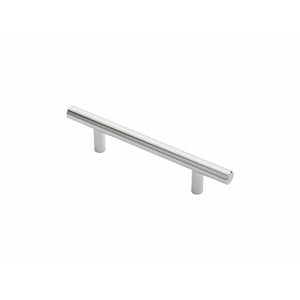
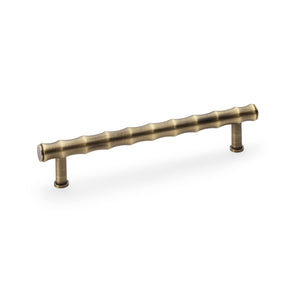
Pull handles are sold by their hole centres — the distance between the two fixing holes, not the overall length. UK stock sizes are:
96mm · 128mm · 160mm · 192mm · 224mm · 320mm
As a rule of thumb, a drawer pull looks right at roughly a third of the drawer width. A 600mm drawer suits a 160–192mm handle; a 900mm drawer suits 224–320mm, or two smaller pulls. Undersized handles on wide drawers are the single most common proportion mistake in a fitted kitchen.
If you are replacing existing handles, measure the centres of the holes already drilled before you order — matching them saves filling and re-drilling every door.
Knobs or pulls?
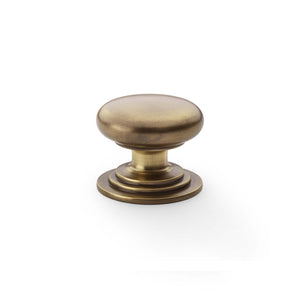
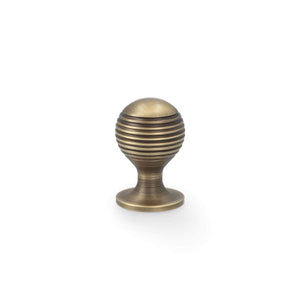
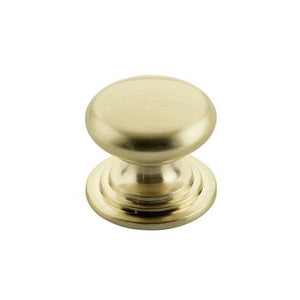
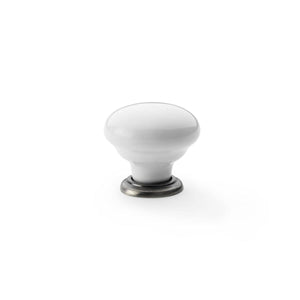
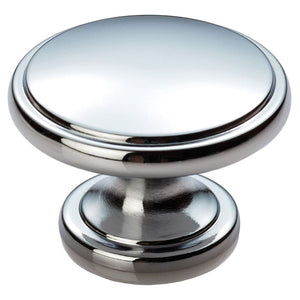
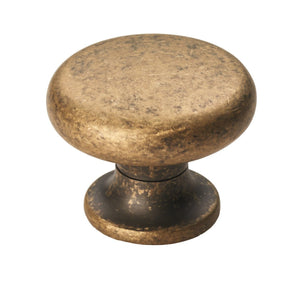
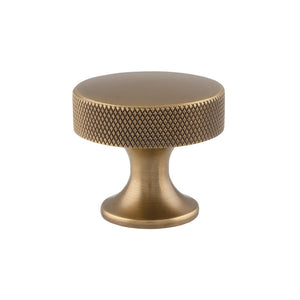
- Knobs — one screw, minimal look, best on doors and small drawers. Less grip, so avoid them on heavy pan drawers.
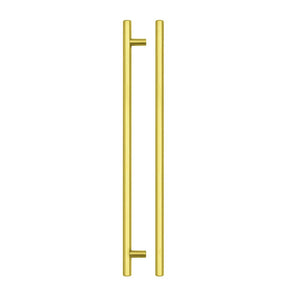
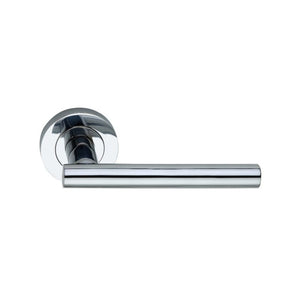
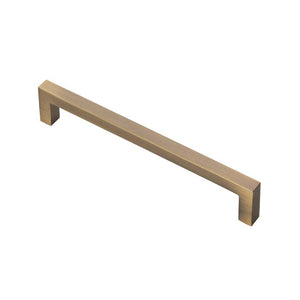
- Pull handles — two fixings, far more leverage, right for drawers and anything used constantly.
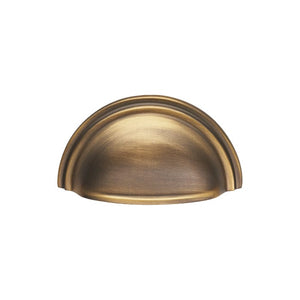
- Cup pulls — traditional and comfortable on drawers, but directional: they only work pulling from below, so keep them off doors.
The most common arrangement in UK kitchens is knobs on doors and pulls on drawers. It works because it matches each fitting to how the unit actually opens, and it stops a long run of drawers looking repetitive.
How to mark and drill accurately
- Make a jig. A scrap of MDF with two holes drilled at the right position, hooked over the door corner, will give you identical placement on every door in the room. A shop-bought cabinet hardware jig does the same job faster.
- Mark from the same corner every time — always the corner opposite the hinge, or you will end up with mirrored doors that do not match.
- Check the door is the right way up before marking. Doors with a visible grain direction are easy to get wrong.
- Drill from the face, with the door supported on a flat surface and a scrap board behind it, to stop the bit blowing out the back.
- Test-fit before you drill the rest. Hold the handle in place, close the door, and check it clears the worktop, the adjacent door and any appliance handle.
Mistakes worth avoiding
- Handles that clash. On a corner unit or beside a fridge, two handles can meet. Check the swing before drilling.
- Base unit handles set too low. They look fine on the bench and feel wrong every day. Keep them in the top 75mm.
- Mixing measurement systems. Most UK hardware is sold in millimetres; American guides quote inches. 3 inches is 76mm — close enough to 75mm to confuse, far enough to be visible across twenty doors.
- Undersized drawer pulls. See the hole-centres rule above.
- Forgetting the appliance doors. Integrated dishwashers and fridges usually need their handle centred rather than cornered.
Frequently asked questions
Where do you put knobs on kitchen cabinet doors?
On the corner opposite the hinge — the bottom corner on wall units, the top corner on base units — set 50–75mm in from each edge. On a shaker door, centre the knob on the frame stile and align it with the inside corner of the frame.
What is the standard height for kitchen cabinet handles?
There is no single height, because it depends on the unit. Base unit handles sit within the top 75mm of the door; wall unit handles within the bottom 75mm. On tall larder and wardrobe doors, centre the pull between roughly 900mm and 1100mm from the floor, which is where most people's hands naturally land.
Should handles be vertical or horizontal on cabinet doors?
Vertical on doors, horizontal on drawers. This follows the direction you pull. The exception is a very wide door, where a horizontal pull near the top can look and feel better.
How do you decide what size handle to buy?
Work to about a third of the drawer width. Measure existing hole centres if you are replacing rather than starting fresh — 96mm, 128mm, 160mm, 192mm, 224mm and 320mm are the common UK sizes.
Where do handles go on wardrobe doors?
On the leading edge opposite the hinge, 50–75mm in, with the pull centred at around waist height. On full-height wardrobe doors a longer vertical pull looks better proportioned than a small knob.
Can you mix knobs and handles in the same kitchen?
Yes, and most fitted kitchens do. Knobs on doors and pulls on drawers is the standard combination. Keep the finish consistent and the mix reads as a decision rather than an accident.
One handle or two on a wide drawer?
Two, once the drawer passes about 900mm. Position each one centred over a third of the width. A single handle on a wide, heavily loaded drawer racks the runners over time.
Shop kitchen cabinet hardware
Knobs, bar handles, T-bars and cup pulls in every finish — from £1.99, with next-day UK delivery.
Also updating your internal doors? Browse our door handles, or read the complete guide to door handles.